
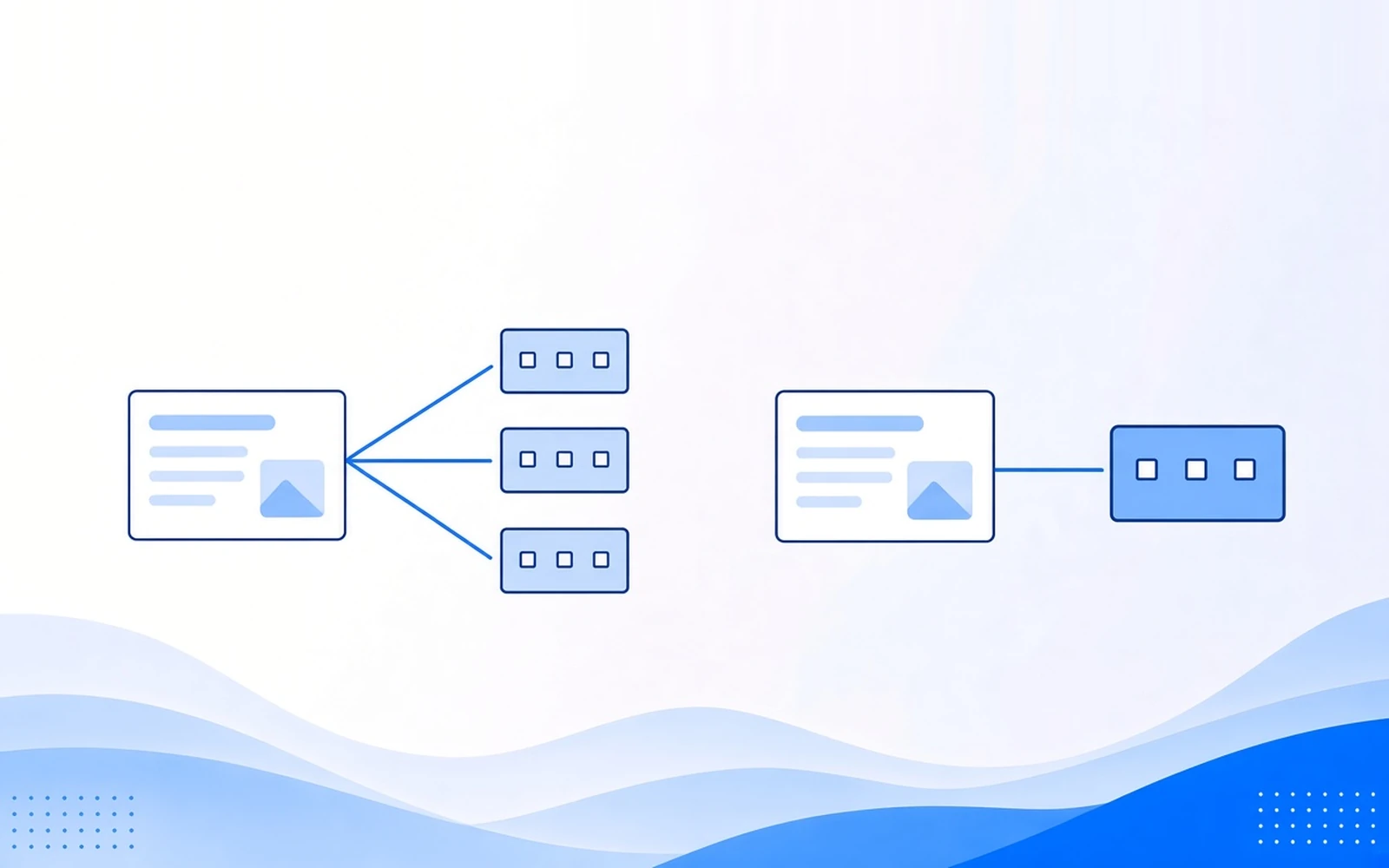
A shared moving lead is sold to more than one company. An exclusive moving lead is routed to you alone. Shared leads often cost less each, but you’re in a race, and some are the wrong move type. Exclusive leads usually cost more. Judge both on cost per booked move, not on the price of the lead.
Not sure which of your moving leads you’re racing for?
What shared moving leads are
A shared moving lead is one person’s moving request, sold or sent to several movers at once, often from a comparison form. The general definitions, for any service business, are in exclusive vs shared leads. Here’s what they mean for a mover.
When you buy a shared lead, you’re paying for a chance at the job, not for a private conversation. By the time your office dials, other movers may already be on the phone, and the customer often picks whoever answers first or quotes lowest.
How many movers get each lead varies by vendor. Don’t guess. Ask, and get the answer in writing.

What exclusive moving leads are
An exclusive moving lead is routed to one buyer under the agreement. It means “this vendor sent the inquiry to you and nobody else.” It doesn’t mean the customer won’t shop around, or that the job is long-distance, qualified or likely to book.
There are two ways to get exclusive inquiries, and they’re worth keeping apart:
- A vendor agrees to sell the lead once. You’re still buying demand someone else generated, just without the race.
- Campaigns in your own accounts. Inquiries from ads you run are exclusive by design, because you generated them. That’s a different path, covered at the end of this post.

Shared vs exclusive moving leads, side by side
| Comparison point | Shared moving leads | Exclusive moving leads |
|---|---|---|
| Who else gets the inquiry | Several other movers | No one else, from that vendor |
| Are you racing to call | Yes, often against movers already dialing | Not against that vendor’s other buyers |
| Fit for local vs long-distance work | A shared form often mixes move types unless the vendor separates them | Depends on the vendor’s filters, so ask |
| Control over targeting and message | Little: the vendor runs the form | Little: the vendor still runs the form |
| What data you keep | The contact you bought | The contact you bought |
| When you stop buying | The leads stop | The leads stop |
This is not the same as pay per call, or running your own ads
How you pay for an inquiry and who runs the ads is a separate question, covered in pay per call vs PPC. Whether to buy from an aggregator or run your own search is another, covered in Google Ads vs lead aggregators. Shared vs exclusive is only about how many movers receive the same inquiry. A bought lead or a bought call can be either. Ask, don’t assume.
The math movers skip
On a per-lead report, shared leads usually look cheaper. Counted per booked move, they can cost more, because more of them are a race or the wrong move type: a one-day local job when you sell long-distance, or a shopper who has already collected three quotes. Exclusive leads can look expensive and still be the better buy. They can also be the worse buy, if they’re exclusive but unqualified, or still the wrong move type.
Say a hypothetical long-distance mover spends $4,500 on 60 shared leads in a month and books 3 long-distance moves, because many of the inquiries were local-only or already talking to other companies. The same mover spends $4,500 on 25 exclusive leads and books 6 long-distance moves.
Illustrative example, not client data
| Metric | Shared leads | Exclusive leads |
|---|---|---|
| Lead spend | $4,500 | $4,500 |
| Leads | 60 | 25 |
| Cost per lead | $75 | $180 |
| Booked long-distance moves | 3 | 6 |
| Cost per booked move | $1,500 | $750 |
Shared looks cheaper per lead. Exclusive wins on cost per booked move, in this example, at half the cost.

Imagine three other movers already ringing the same customer while your estimator is still building a long-distance quote. The lead was cheap. The job went to whoever called first.
The cheaper lead isn’t the cheaper move until you count the moves.
How to work out cost per booked move from your own spend, step by step, is in how much do moving leads cost.
When shared moving leads can still make sense
Shared leads can still fit when:
- You’re testing a new route or move type before you put money into campaigns of your own.
- You need to fill a short gap in the calendar.
- Your team can respond immediately and is willing to compete on speed, every time.
Treat them as a tap you can open and close, not your only source.
When exclusive moving leads are the better buy
Exclusive leads earn their higher price when the job takes a real quote. Long-distance work rarely closes in the first minute, and it’s easier to quote when you have the first conversation to yourself.
Still, exclusive is only as good as the targeting behind it, the move-type filter, the qualifying and your follow-up. Suppose the office upgrades to exclusive leads and the calendar still doesn’t fill, because the exclusive leads are still local-only jobs. Exclusivity solved the race. It didn’t solve the fit.
What to ask a moving-lead seller before you sign
- How many movers receive each lead? Get the number in writing.
- Are local and long-distance leads separated, and can you filter by origin or destination?
- What exactly is exclusive: the lead, the phone number, or only a time window?
- What counts as a chargeable lead, and how are duplicates, repeats and the wrong move type handled?
- Can you hear call recordings or see the form data behind each lead?
- What are the dispute and credit rules?
- Who owns the contact data if you stop buying?
- How is consent collected, and does it cover your company by name? Check the consent rules where you operate.
Agree first what a usable inquiry is, so the vendor’s count and your office’s match. See what is a qualified call.
If you want exclusive moving leads you also keep
Inquiries from campaigns in your own accounts are exclusive by design, and the data and history stay with you. Our call and lead generation work is built around qualified inbound calls and form leads, the inquiries your team can actually turn into customers, with ads and pages that make calling the easy option.
Give each move type a page that matches the ad, with a short form, an easy way to call and qualifying questions for move type and timing. That’s the idea behind our landing pages, and why that page shouldn’t be your homepage, as we explain in landing page vs homepage. Track every call and form back to its source with tracking and analytics, and let media buying move spend toward whatever produces booked work.
Then judge every source, bought or your own, the same way: answer fast, label outcomes and compare cost per booked move, local and long-distance kept apart. See our services.
FAQ
What is the difference between shared and exclusive moving leads?
A shared moving lead is sold to more than one moving company, so several movers may call the same customer. An exclusive moving lead is sold or routed to you alone under the agreement. Exclusive doesn’t mean the job books, or that it’s the move type you want. It only means that vendor didn’t send it to anyone else.
Are exclusive moving leads worth it?
They can be, when you judge them on cost per booked move rather than on the price of the lead. An exclusive lead that books more often can cost less per move than a cheaper shared one. But exclusive leads aren’t automatically the better buy. If they’re the wrong move type or poorly qualified, the higher price buys you very little.
Why do shared moving leads convert poorly?
They don’t always. But a shared lead is a race, so the customer may book with whichever mover reached them first. Some shared leads are also the wrong move type, such as a short local job when you sell long-distance work. Speed of response and fit usually matter more than the label on the lead.
How many companies get a shared moving lead?
It varies by vendor, and there’s no single number to rely on. Ask each seller how many movers receive each lead, whether that number changes by move type, and get the answer in writing. Then check how often customers say they’ve already spoken to other movers.
How should movers compare shared and exclusive leads?
Compare them on cost per booked move, not cost per lead. Use the same definition of a booked move for both, put each source on its own line, and keep local and long-distance moves separate. A source that looks cheap per lead can still be the more expensive one once you count the moves it actually produced.
Are exclusive moving leads the same as leads from your own ads?
No. Exclusive vendor leads are still bought demand: someone else ran the form, and the leads stop when you stop paying. Inquiries from campaigns in your own accounts are exclusive by design, because you generated them, and you keep the account history and the data about what customers searched for and which moves booked.
Want moving leads you don’t have to race for?
We’ll look at which of your inquiries are shared, which are exclusive, and what each source costs per booked move.