
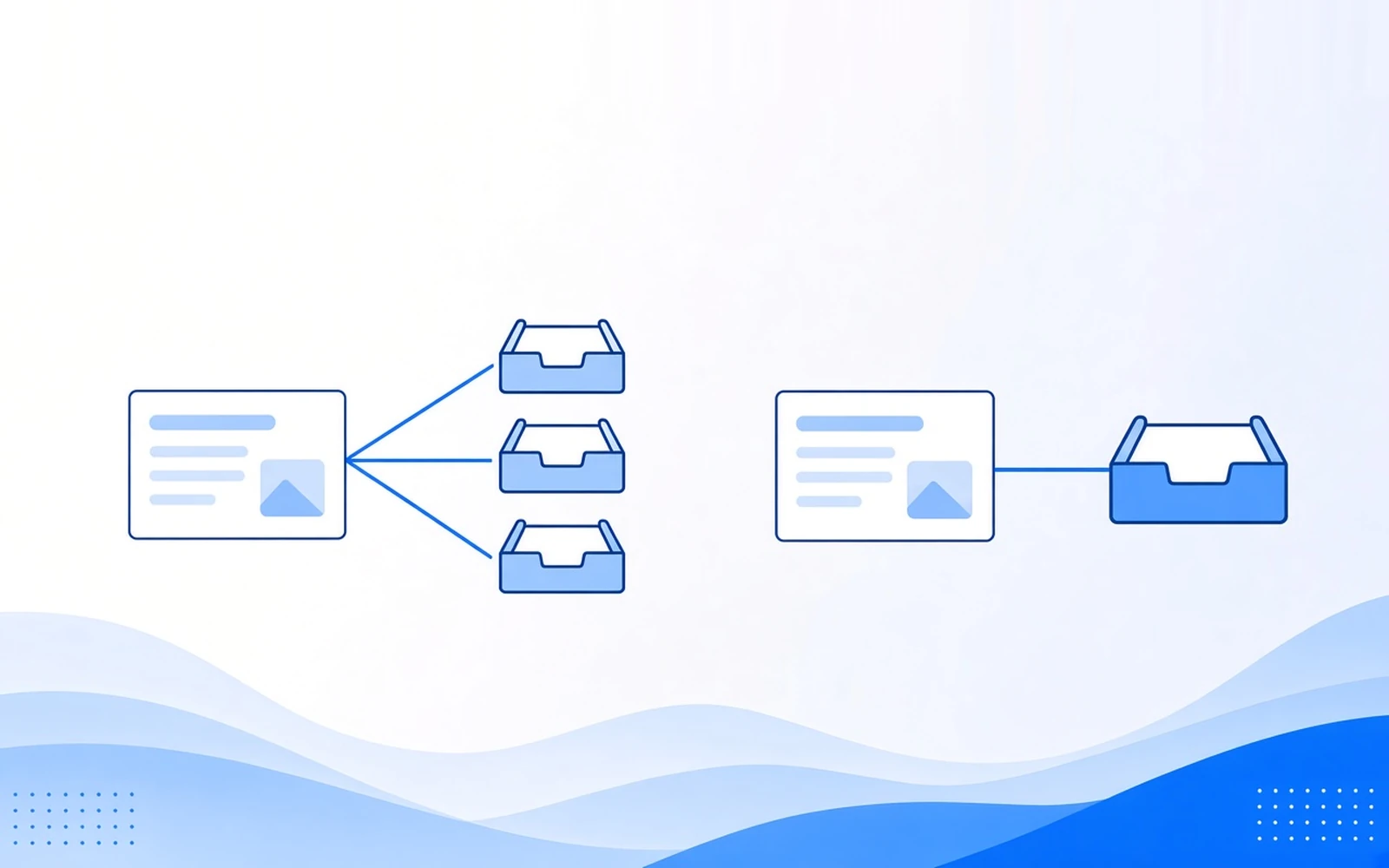
A shared lead is one inquiry sold to more than one company. An exclusive lead is sold or routed to you alone. Shared leads often cost less each, but you’re in a race. Exclusive leads usually cost more each, and you still have to check the contract and judge them on booked jobs, not on the price of the lead.
Not sure which of your lead sources is paying off?
What shared leads are
A shared lead is one person’s request, a form or a call, that gets sold or sent to several companies at once. It usually comes from a list, a marketplace or a comparison site. You’re paying for a chance at the job, not for a private conversation.

In practice, the prospect fills out one form and then often gets several calls within minutes. By the time your team dials, they may already have a quote or two. Speed decides who gets a real conversation, and price often decides who gets the job.
Imagine an insurance office that buys a shared form list and calls its first lead of the morning. The person sighs and says three other agencies already left voicemails. That’s simply what the office bought.
What exclusive leads are
An exclusive lead is an inquiry routed to one buyer under the agreement. Exclusive means “you are the only company this vendor sent it to.” It doesn’t mean the person won’t shop around, that they’re qualified, or that they’ll book.
There are two kinds of exclusivity, and they’re worth keeping apart:
- Bought exclusivity. A vendor agrees to sell each lead once, to you. You’re still buying someone else’s demand, on their terms.
- Exclusivity by design. Leads from campaigns you run in your own accounts are exclusive because you generated them. Nobody else was sold the same inquiry.
This post is mostly about the first kind.

Exclusive vs shared leads, side by side
The core question is simple: how many companies received the same inquiry?
| Comparison point | Shared leads | Exclusive leads (bought) |
|---|---|---|
| Who else gets the inquiry | Other companies, depending on the vendor | No one else from that vendor |
| What you’re paying for | A chance at the job, alongside others | The only sale of that inquiry from that vendor |
| How fast you can start | Often sooner, because lists are ready to buy | Varies; supply can be tighter |
| Control over message and targeting | Little; the vendor generates the leads | Little to some, depending on the vendor |
| What data you keep | The contact details you were sent | The contact details you were sent |
| When you stop paying | Leads stop, and you keep little | Leads stop, and you keep little |
On ownership, bought exclusive leads look a lot like shared ones.
This is not the same as pay per call vs PPC
Pay per call vs PPC is about how you pay and who runs the ads. Exclusive vs shared is about how many companies receive the same inquiry. The two questions cross over: a pay-per-call program can be shared or exclusive, and so can a form-lead program. Ask, don’t assume.
Why cost per lead is a poor way to choose
Shared leads can look cheaper on a per-lead report and still cost more per booked job, because more of them turn into a race or a poor fit. Exclusive leads can look expensive and still be the better buy. Or the worse one, if they’re exclusive but unqualified. The only fair comparison is cost per lead vs cost per booked job, with the same definition of a booked job on both lines.
Say a hypothetical plumbing company spends $2,400 on 80 shared leads in a month and books 8 jobs. The same month it spends $2,250 on 30 exclusive leads and books 9 jobs.
Illustrative example, not client data
| Metric | Shared leads | Exclusive leads |
|---|---|---|
| Spend | $2,400 | $2,250 |
| Leads | 80 | 30 |
| Cost per lead | $30 | $75 |
| Booked jobs | 8 | 9 |
| Cost per booked job | $300 | $250 |
On cost per lead, the shared list wins easily. On cost per booked job, the exclusive leads win, though not by a landslide. Change the spend or the booking rate a little and the answer could flip. That’s the point: you can’t know until you track bookings back to each source.

Tracking that is what our tracking and analytics work is for: connecting call tracking, form data, lead status and sales outcomes by source, so you can see which sources produce real opportunities, not just lead volume.
When shared leads can still make sense
Shared leads have a place. They work best as a tap you turn on for a reason:
- Testing a new service or area before you invest in campaigns of your own.
- Filling a short gap, like a slow few weeks or a new crew that needs work.
- A team that can respond immediately and is willing to compete on speed every time.
What they shouldn’t be is the only way work comes in. Suppose an HVAC company pauses a shared-lead program for two weeks and asks what it still owns. A list of names it was sent, and not much else.
When exclusive leads are the better buy
Exclusive leads earn their higher price when you want the first conversation to yourself, when the job takes a real quote or a site visit, and when your team has time to work each lead properly instead of racing.
Still, exclusive is only as good as the targeting, the qualifying and the follow-up. An exclusive lead from someone who wants a service you don’t offer is still a dead end. You just didn’t have to share it.
What to ask a lead seller before you sign
Exclusive is a contract term, not a quality guarantee. Get clear answers to these first:
- How many companies receive each lead?
- What exactly is exclusive: the lead, the phone number or a time window?
- What counts as a billable lead?
- How are duplicates and repeat inquiries handled?
- Can I hear call recordings or see the full form data?
- What are the dispute or credit rules?
- Who owns the contact data if I stop buying?
- How is consent collected, and does it cover my company by name?
On that last question, check the consent rules where you operate.
If you want exclusive leads you also keep
Bought exclusivity ends the day you stop paying. Exclusivity you generate yourself doesn’t. When you run campaigns in your own accounts, every inquiry is yours by design, and so are the history and data behind it.
That’s the idea behind call and lead generation campaigns built around qualified inbound calls and form leads, where ads and pages make calling the easy option. A dedicated page that matches the ad helps here, which we cover in landing page vs homepage. A couple of qualifying questions on the page help your team sort inquiries before anyone picks up the phone.

Whichever sources you use, the process is the same. Answer fast. Review calls and forms. Label every outcome. Compare every source on cost per booked job. See how the pieces fit in our services.
FAQ
What is the difference between exclusive and shared leads?
A shared lead is one inquiry sold or sent to more than one company, so several businesses contact the same person. An exclusive lead is routed to one buyer under the agreement. Exclusive leads usually cost more each and avoid the race, but they don’t guarantee the person is qualified or won’t compare quotes. Judge both on cost per booked job.
Are exclusive leads worth it?
They can be, when you want the first conversation to yourself and the job takes a real quote. Whether they’re worth it depends on what they cost per booked job, not per lead. Check what “exclusive” covers in the contract, how disputes work and who owns the data. Exclusive but unqualified leads are still a poor buy.
Why do shared leads convert poorly?
They don’t always, but a shared lead is a race, so speed and fit matter more. Several companies contact the same person, often within minutes, and the prospect may already have quotes before you call. That’s why shared leads reward teams that answer immediately and qualify quickly.
How many companies get a shared lead?
It varies by vendor, and sometimes by lead. Some sell each inquiry to a few buyers, others to more. Ask the vendor directly how many companies receive each lead, whether that number can change, and get the answer in writing before you sign. Don’t assume a typical number.
How should you compare exclusive and shared leads?
Compare them on cost per booked job, using the same definition of a booked job for both. Track every lead back to its source, record which ones book, and divide each source’s spend by its booked jobs. Cost per lead almost always flatters the cheaper shared list, so it shouldn’t decide the budget on its own.
Are exclusive leads the same as leads from your own ads?
No. Exclusive vendor leads are still bought demand: one vendor promises not to sell the inquiry to anyone else, and the leads stop when you stop paying. Leads from your own campaigns are exclusive by design, because nobody else was sold them, and you keep the account history and data when you pause.
Want leads that you don’t share?
We’ll look at where your inquiries come from today and what each source costs per booked job.