
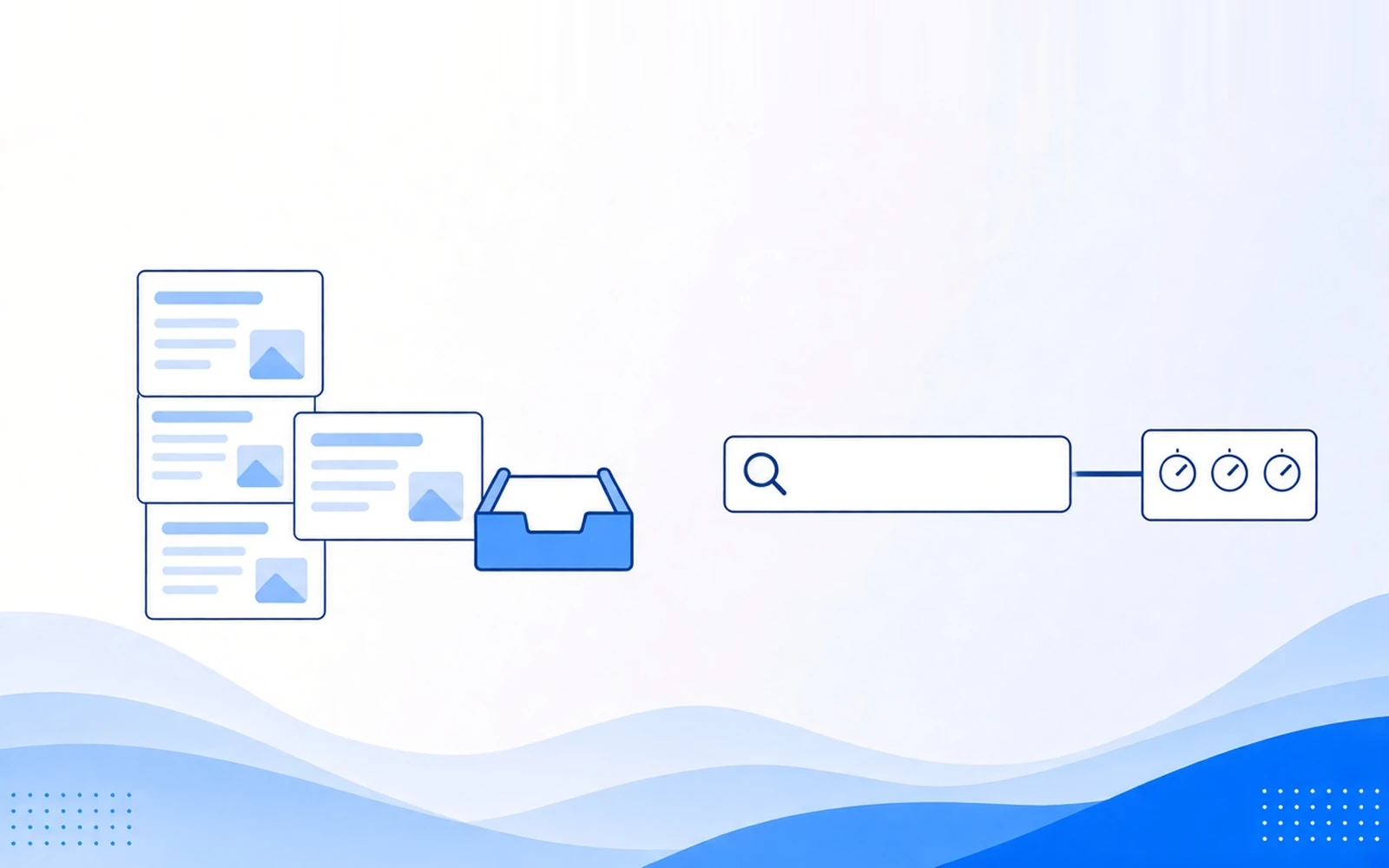
A lead aggregator sells you inquiries it generated or collected. Google Ads is a search campaign you run in accounts you control, aimed at people already looking. Aggregator leads can start sooner and often look cheaper per lead. Your own campaigns give you control, plus an account and data you keep. Judge both on cost per booked job.
Not sure which of your sources is earning its budget?
What a lead aggregator is
A lead aggregator is a vendor that generates or collects inquiries, forms or calls, and sells them to service businesses, usually sorted by trade and service area. You’re buying a lead, not running a campaign. The demand lives with the vendor.

In the office, it looks like this. A new batch of names or calls arrives. You didn’t write the ad that produced them, and you never saw the page they filled out. Often you get a phone number, a name and a line or two from a short form, and that’s it.
Imagine a moving office that buys a daily batch of long-distance leads. Some book, some don’t. After months of buying, it still can’t tell which searches produced the good ones, because those searches happened on someone else’s site.
What running Google Ads means
Running Google Ads means you, or an agency, run paid search in accounts you control, for people already looking. Someone searches for the job, sees your ad, and lands on your page or calls a tracked number.
You decide the pieces an aggregator decides for you:
- the keywords and the offer, so you pay for the jobs you want
- the ad copy that makes the promise
- the landing page that keeps it
- the budget, and where it moves
- the tracking that ties each inquiry to its source

There’s one more difference, and it shows up when you stop. Stop buying from a vendor and you usually keep the contacts you paid for, depending on the contract. Pause a campaign in an account you own and you keep the account itself: the keywords, the search history and the record of what produced booked work.
Google Ads vs lead aggregators, side by side
The core question is where the demand comes from.
| Comparison point | Lead aggregator | Google Ads (your own campaigns) |
|---|---|---|
| Who generates the demand | The vendor | You, through ads you run |
| Who else may get the inquiry | Depends on the vendor, so ask | No one else was sold it |
| What you control | Little beyond trade, area and volume | Message, targeting, page and budget |
| What you can measure | The leads you receive and which ones book | Searches, ads, calls, forms and booked jobs by source |
| What you keep if you stop paying | The contacts you paid for | The account, its history and its data, if the account is yours |
| How fast you can start | Often sooner, because you’re buying a ready list | Slower, because campaigns and tracking need setup |
This is not the same as exclusive vs shared leads
Exclusive vs shared leads is about how many companies receive the same inquiry. An aggregator lead can be either. A Google Ads inquiry is exclusive by design, because you generated it, though the person can still shop around.
This is not the same as pay per call vs PPC
Pay per call vs PPC is about how you pay and who runs the ads. An aggregator program might bill per lead or per call, so ask how a vendor bills rather than assuming. Google Ads is a campaign you run.
Why the price of the lead is a poor way to choose
Aggregator leads can look cheaper on a per-lead report and still cost more per booked job, if many of them are a poor fit or shared with competitors racing to call first. Your own search campaigns can look expensive per lead and still be the better buy. Or the worse one, if the page, the tracking or the follow-up is weak. The fair test is cost per lead vs cost per booked job, with the same definition of a booked job on both lines.
Say a hypothetical plumbing company spends $4,000 in a month with a lead aggregator and receives 100 leads, 10 of which become booked jobs. It spends another $4,000 on its own search campaigns, receives 50 inquiries and books 16 jobs.
Illustrative example, not client data
| Metric | Lead aggregator | Own search campaigns |
|---|---|---|
| Spend | $4,000 | $4,000 |
| Leads or inquiries | 100 | 50 |
| Cost per lead | $40 | $80 |
| Booked jobs | 10 | 16 |
| Cost per booked job | $400 | $250 |
On cost per lead, the aggregator looks twice as efficient. On cost per booked job, the campaigns win, in this example. Give the same company a weak landing page or a slow call-back and the campaigns could lose.
Search doesn’t win by default. It wins when the whole chain behind the ad works.

You only find out which is true for you by tracking every inquiry to an outcome. That’s what our tracking and analytics work does: connecting call tracking, form data, lead status and sales outcomes by source.
When a lead aggregator can still make sense
Aggregators have a place. They work best as a tap you open for a reason:
- Testing a new service or area before you invest in campaigns of your own.
- Filling a short gap, like a slow few weeks.
- Needing inquiries this week while your search campaigns are still being set up.
The catch is that it’s rented demand. Suppose a home-service company pauses the aggregator for two weeks and asks what it still owns. A list of contacts, and very little about what its customers searched for or which messages worked. An aggregator shouldn’t be the only way work comes in.
When Google Ads is the better long-term choice
Google Ads is usually the better long-term choice when you want control over which jobs you pay for, inquiries that are exclusive by design, and an account history you keep. That matters most when each job is worth a real quote, not a cheap one-off.
It’s also how we approach call and lead generation: campaigns built around qualified inbound calls and form leads, with ads and pages that make calling the easy option.
What has to be in place before you scale spend
Control only pays off if the rest of the chain is ready. Before raising the budget, check:
- The ad accounts are yours, or you can take them with you.
- Each campaign has a page that matches the ad, not your homepage. We explain why in landing page vs homepage, and it’s the core of landing pages built for one ad and one offer.
- Calling is easy, and a short form catches people who can’t talk yet.
- Every inquiry traces back to its source through tracked numbers and form tracking.
- The report includes booked jobs, not only leads.
- The team can answer quickly, including the first hour of a busy morning.
If any of these are missing, fix them first. More spend on a broken chain only buys more waste.

See how these pieces fit together across our services.
FAQ
What is the difference between Google Ads and a lead aggregator?
A lead aggregator sells you inquiries it generated or collected, so the demand lives with the vendor. Google Ads is a search campaign you run in accounts you control, aimed at people already looking for the job. With an aggregator you buy leads. With Google Ads you control the keywords, ads, page, budget and tracking, and you keep the account history.
Are lead aggregators worth it?
They can be, as a short fill or a test, but they’re rented demand. They make sense when you need inquiries quickly or want to test a new service or area before building campaigns. Judge them on cost per booked job, not the price per lead, and don’t let an aggregator become the only way work comes in.
Is Google Ads better than buying leads?
Not always. It’s usually the better long-term choice when you want control over which jobs you pay for and data you keep. But a weak page, missing tracking or slow follow-up can make search campaigns cost more per booked job than bought leads. Compare both on cost per booked job, using the same definition of a booked job.
Do you own the leads from a lead aggregator?
You usually own the contacts you paid for, under the vendor’s contract, but not the demand source that produced them. When you stop buying, new leads stop and you keep little about how they were generated. Ask the vendor who owns the data if you stop buying, and check the contract and the consent rules where you operate.
How should you compare Google Ads and lead aggregators?
Compare them on cost per booked job, using the same job definition for both, not on cost per lead. Track every inquiry back to its source, record which ones book, and divide each source’s spend by its booked jobs. Cost per lead will often flatter the aggregator, so it shouldn’t decide the budget on its own.
Can you use Google Ads and a lead aggregator at the same time?
Yes, as long as each source has its own tracking and you compare them on booked jobs. Give your campaigns their own tracked numbers and form sources, keep the aggregator’s leads labeled separately, and review cost per booked job for each. Just don’t let the aggregator become the only source, because you build nothing of your own while you pay for it.
Want a lead source you actually control?
We’ll look at where your inquiries come from today and what each source costs per booked job.