
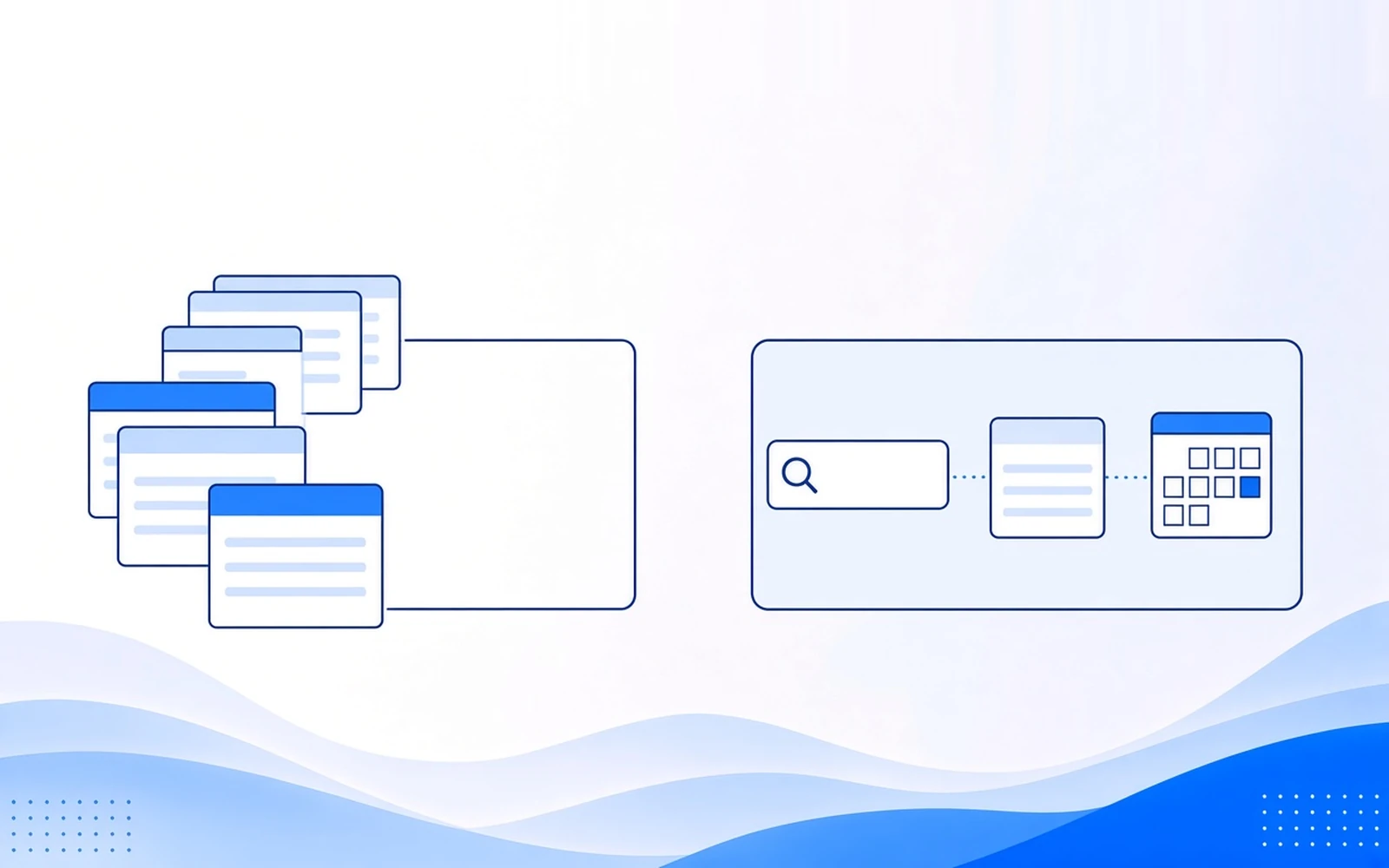
For a long-distance mover, a lead aggregator is rented demand: a vendor collects moving inquiries and sells them, often with local and interstate names in one batch. Google Ads is search you run yourself, aimed at the long-distance jobs you want. Judge both on cost per booked long-distance move, not on the price of a lead.
Not sure which source is actually filling your long-distance calendar?
How a lead aggregator fills a mover’s calendar
In moving, a lead aggregator is a vendor that collects moving inquiries through its own forms or call lines and sells them to companies like yours. You’re buying a lead, not running a campaign. The general model is in Google Ads vs lead aggregators.
In the office, a batch of names lands in the morning. You didn’t write the ad or see the form, and whether a job is local or long-distance often isn’t known until your estimator calls. A two-bedroom apartment across town and a family’s interstate move can look identical in the list. Some vendors filter by move type and some don’t, so ask.

How your own Google Ads reach long-distance customers
Running Google Ads means you, or an agency, run paid search on Google for people already looking, in accounts you control. Someone searches for a long-distance mover, sees your ad, and reaches your page or tracked number.
For long-distance work, the difference is aim. You choose the searches, so interstate moves can have a campaign, ad and page of their own, with local jobs kept separate or left out. You set the budget for each job type instead of paying for whatever inquiries a vendor has that day.
Pause that campaign over a slow month and it’s still there when you restart, with a history of which long-distance searches became booked moves.

Google Ads or lead aggregators: which books more long-distance moves?
| Comparison point | Lead aggregator | Google Ads (your own campaigns) |
|---|---|---|
| Who generates the demand | The vendor’s forms and call lines | Your ads, on searches you chose |
| Who else may get the inquiry | Depends on the vendor, so ask | No one else was sold it |
| Aiming at long-distance work | A mixed batch, unless filtered by move type | Separate long-distance and local campaigns |
| What you control | Little beyond move type and volume | Message, targeting, page and budget |
| What you can measure | The leads you receive and which ones book | Searches, calls, forms and booked moves by job type |
| What you keep if you stop paying | The contacts already bought | The account and its search history, if it’s yours |
| How fast you can start | Often sooner, because the list is ready | Slower, because campaigns and tracking need setup |
Local inquiries and long-distance jobs are not the same product
Moving a few items across town is a few hours of crew time. A long-distance move takes a proper estimate and a longer sales conversation. If a batch mixes them, cost per lead can look fine while the long-distance calendar stays thin. Judge each source on booked long-distance moves and booked local moves, as separate lines. The cost math is in how much do moving leads cost.
This is not the same as exclusive vs shared moving leads
Shared vs exclusive moving leads is about how many movers receive the same inquiry. An aggregator lead can be either. A Google Ads inquiry is exclusive by design, because you generated it, though the customer can still collect other quotes.
This is not the same as pay per call vs PPC
How you pay, and who runs the ads, is covered in pay per call vs PPC. A moving-lead program can charge by the lead or by the call, so read the terms. With Google Ads you aren’t buying inquiries at all.
Which costs less per long-distance move?
A mixed batch can look cheaper per lead and still cost far more per booked long-distance move, because many of the names were local jobs. Your own campaigns can look expensive per inquiry and still win, or lose if the page, tracking or follow-up is weak. The reporting idea is in cost per lead vs cost per booked job.
Say a hypothetical long-distance mover spends $6,000 in a month on each source. The aggregator batch brings 100 leads and 10 booked moves, only 2 of them long-distance. Google Ads aimed at long-distance searches brings 48 inquiries and 10 booked long-distance moves.
Illustrative example, not client data
| Metric | Aggregator batch | Long-distance search campaigns |
|---|---|---|
| Spend | $6,000 | $6,000 |
| Leads or inquiries | 100 | 48 |
| Cost per lead or inquiry | $60 | $125 |
| Booked moves, all types | 10 | 10 |
| Cost per booked move, all types | $600 | $600 |
| Booked long-distance moves | 2 | 10 |
| Cost per booked long-distance move | $3,000 | $600 |
Per lead, the aggregator costs less than half as much. On a blended report, the two sources tie. Split by job type, each long-distance move from the batch cost five times as much, in this example. The 8 local moves are real revenue. They just aren’t what a long-distance budget was meant to buy.

A busy local lead count can hide a thin long-distance calendar.
You only find out which story is yours by tracing every inquiry to an outcome. Our tracking and analytics work connects spend to calls, leads and booked jobs, not just to traffic.
When lead aggregators still earn a place in your lead mix
An aggregator can earn a place in the mix when it has a specific job to do:
- Testing a new long-distance lane or a new local service before you invest in campaigns of your own.
- Filling a short gap in the calendar.
- Needing inquiries this week while your search campaigns are still being set up. That speed is useful, but keep counting booked long-distance moves.
Treat it as a tap, not a foundation. The day you stop paying, the leads stop, and you’ve learned little about what long-distance customers searched for. That’s a poor base for a long-distance book of business.
When your own search ads should carry the long-distance work
Google Ads is usually the stronger long-term choice when you want to pick which jobs you pay for and keep the account history. It matters most when each long-distance move justifies a real estimate.
It’s also how we approach call and lead generation: campaigns around qualified inbound calls and form leads, the inquiries your team can actually turn into customers.
What has to be in place before you scale spend
Before you raise long-distance spend, check:
- The ad accounts are yours, or you can take them with you.
- Long-distance and local moves each have their own page, matched to the ad. Why it shouldn’t be your homepage is in landing page vs homepage, and it’s the idea behind our landing pages: one ad, one offer.
- Calling is easy, and a short form catches people who can’t talk yet, with a question that sorts local from long-distance (see inbound calls vs form fills).
- Every call and form traces back to its source, through tracked numbers and form tracking.
- The report shows booked moves, split by local and long-distance, not only leads, with one agreed definition of a qualified call.
- Someone answers quickly, because a customer who reaches voicemail may call the next mover.
None of this guarantees search beats the batch. It makes the comparison fair.
See how these pieces fit together across our services.

FAQ
What is the difference between Google Ads and a lead aggregator for movers?
A lead aggregator sells movers inquiries it collected, often with local and long-distance names in one batch. Google Ads is a search campaign you run in your own accounts, so you choose the searches, ads and pages, and can aim at long-distance moves separately from local ones.
Are lead aggregators worth it for long-distance movers?
They can be, as a short fill or a test, but they’re rented demand, and a mixed batch can hide a weak long-distance result behind a busy local lead count. Ask whether the vendor separates move types, and judge the leads on cost per booked long-distance move.
Is Google Ads better than buying moving leads?
Not always. It’s usually the better long-term choice when you want to aim at long-distance work and keep the data. A mixed page, missing tracking or slow call-backs can still make it the costlier source. Compare both on cost per booked move, split by local and long-distance.
Do movers own the leads from a lead aggregator?
Usually you own the contacts you paid for, under the vendor’s contract, but not the source that produced them. When you stop buying, new leads stop and you keep little about what those customers searched for. Ask who owns the data, and check the consent rules where you operate.
How should a mover compare Google Ads and lead aggregators?
On cost per booked move, with the same definition of a booked move for both. Divide each source’s spend by the long-distance moves it booked, and report its local bookings on a separate line. Cost per lead tends to flatter a mixed batch, so it shouldn’t set the budget.
Can a mover use Google Ads and a lead aggregator at the same time?
Yes, if each source has its own tracking and you compare them on booked moves, split by job type. Give your campaigns their own tracked numbers and forms, and label the aggregator’s leads as they arrive. Don’t pour both into one unsplit report, and don’t let the aggregator become your only source.
Want long-distance demand you can actually keep?
We’ll look at where your moving inquiries come from today and what each source costs per booked long-distance move.