
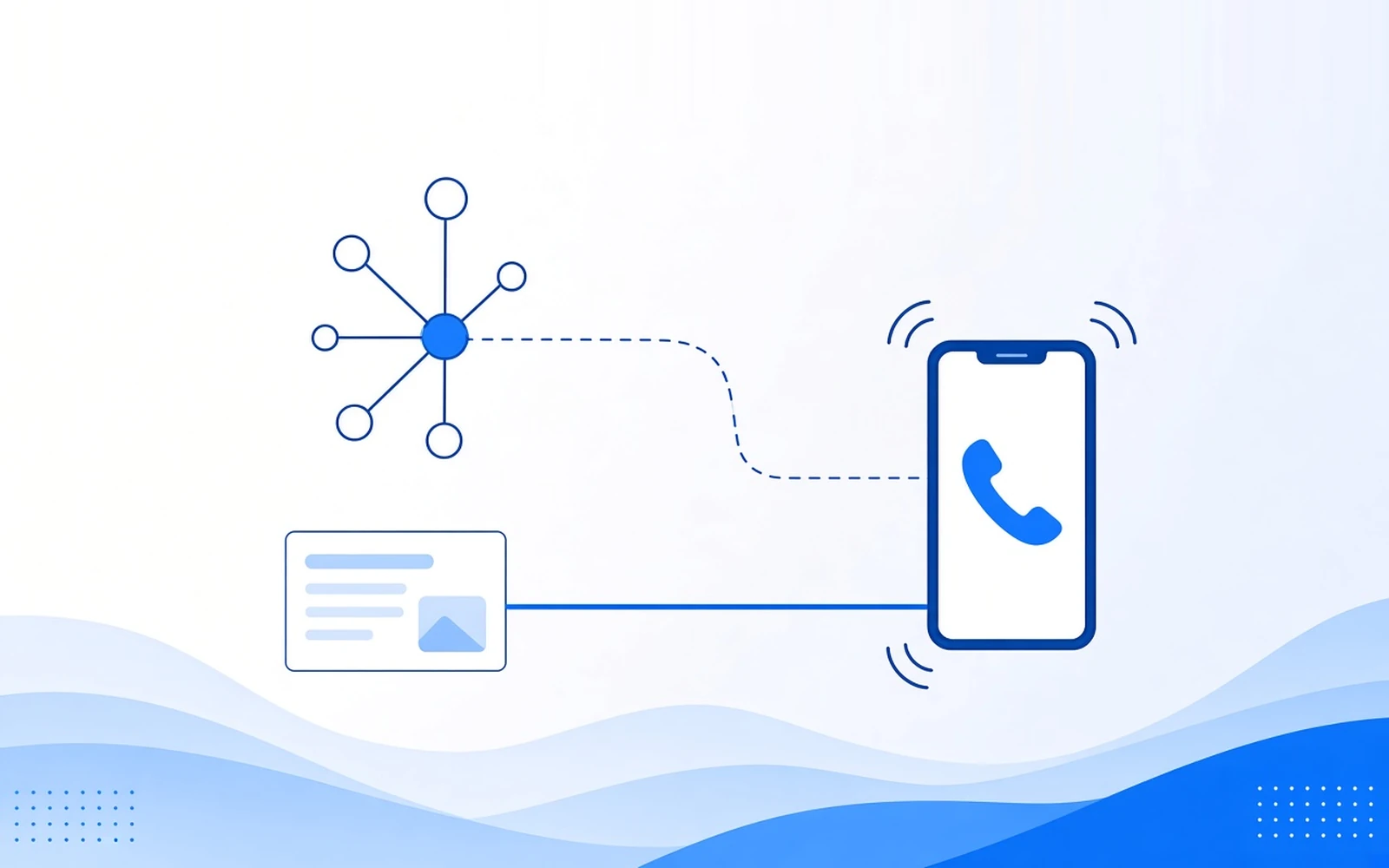
With pay per call, a network runs the ads and sells you calls that meet agreed rules. With PPC, you or your agency run the ads in your own accounts, pay for clicks, and every call is yours. Pay per call is simpler to start. PPC gives you control and data you keep.
Weighing bought calls against your own campaigns?
What pay per call is and how it works
Pay per call is a model where someone else generates inbound phone calls and routes them to businesses that pay for each call meeting agreed rules. The rules usually cover a minimum call length, the service wanted and the caller’s area.
Three parties are involved:
- Publishers make the calls happen, through ads, websites or directories that show a phone number.
- The network sets the rules, routes each call to a buyer and handles billing.
- The buyer is you, the business that answers and pays for qualifying calls.

The appeal is obvious: no ads, pages or tracking to build. You agree on rules and the phone rings. What you give up is visibility. You usually don’t see the ad behind the call, the search, or who else gets similar callers.
What PPC call campaigns are
PPC call campaigns are paid ads you run in your own accounts, built so that calling is the easiest next step. That means paid search for people already looking, and paid social where it fits, with ads written to get a call rather than a browse.
A campaign built for calls has three parts:
- Call-focused ads that match what the person searched and make the phone number prominent.
- A landing page with a click-to-call button, a short form for people who can’t talk yet, and a couple of qualifying questions. That’s how we approach landing pages and conversion testing.
- A tracked number per campaign, so every call traces back to the campaign that produced it.

You pay the ad platform for clicks, not calls. Some clicks never call. But every call that comes in is yours alone, and you can see where it came from.
Pay per call vs PPC, side by side
The core difference is ownership. One model rents you the outcome. The other gives you the machine that produces it.
| Comparison point | Pay per call | PPC call campaigns |
|---|---|---|
| Who runs the ads | The network and its publishers | You or your agency |
| Who owns the ad account and its history | The network or publisher | You |
| What you pay for | Calls that meet the agreed rules | Clicks on your ads |
| Is the call exclusive | Depends on the network, so ask | Yes, it came from your ad |
| Control over targeting and message | Limited to the rules you agree | Full: keywords, ads, pages, budget |
| Data you get | Varies; often the call and little else | Campaign, ad and source for every tracked call, plus recordings if you turn them on |
| How fast you can start | Fast, once terms are agreed | Slower, because campaigns and tracking need building |
| What happens when you stop | Calls stop, and you keep little | Calls stop, but you keep the account history and data |
When pay per call makes sense
Pay per call has a place. It works best when speed matters more than learning:
- Testing a new service or area. Before you invest in campaigns for a new service line, bought calls can show whether there’s real demand.
- Filling a short gap. A slow few weeks or a seasonal dip.
- Teams without time for ads or tracking. Buying calls keeps the phone ringing while you sort that out.
The catch is that it’s rented demand. Imagine an HVAC office that has bought calls for a long stretch and wants to know what it would keep if it stopped. Very little: no ad history, no record of which searches produced booked work. Pay per call shouldn’t be the only place your calls come from.
When running your own call campaigns wins
Your own campaigns win when you want exclusive calls by design, control over which jobs you attract, and data you keep. You decide whether to chase emergency repairs or larger installs. Every number is tracked, so you see which campaigns and ads produce booked work.
That’s how we build call and lead generation campaigns: around qualified inbound calls and form leads, with ads and pages that make calling the easy option.
What to ask a pay-per-call provider before you sign
If you do buy calls, get clear answers to these first:
- Is the call exclusive to me?
- What counts as a billable call?
- How are duplicate or repeat callers handled?
- Can I hear the recordings?
- Where and how are the calls generated?
- Can I dispute a call that wasn’t a fit?
- Who owns the caller data?
Exclusivity matters most. Suppose the network also routes similar callers to three other movers. Every one of those calls is a price fight before anyone picks up.
How to judge either model: cost per booked job
Whichever model you use, compare sources on cost per booked job, not cost per call. We cover the math in more detail in cost per lead vs cost per booked job.
Say a hypothetical plumbing company spends $2,000 on bought calls in a month and gets 40 calls, so each call costs $50. It books 8 jobs. The same month, it spends $2,000 on its own search campaign and gets 25 calls at $80 each. It books 10 jobs.
Illustrative example, not client data
| Metric | Bought calls | Own search campaign |
|---|---|---|
| Spend | $2,000 | $2,000 |
| Calls | 40 | 25 |
| Cost per call | $50 | $80 |
| Booked jobs | 8 | 10 |
| Call-to-booking rate | 20% | 40% |
| Cost per booked job | $250 | $200 |
On cost per call, the bought calls look cheaper. On cost per booked job, the company’s own campaign wins. A caller with a real need beats a pile of cheap calls, and only tracking bookings back to source shows which one sends them.

Making calls worth more, whichever model you use
The model decides where calls come from. What happens after the phone rings decides what they’re worth.
- Answer fast. A missed call from a bought source is money gone. A missed call from your own ad often goes to the next result on the page.
- Record and review calls. It’s the fastest way to judge a source. Check the consent rules where you operate.
- Label every outcome. Booked, quoted, not a fit, spam. Without labels, every call looks the same in a report.
- Report calls and forms separately. They close at different rates, and blending them hides problems.
That’s the core of our tracking and analytics work: tracked numbers and form tracking so each lead traces back to its source. You can see how it fits with the rest of our services.
FAQ
What is pay per call marketing?
Pay per call marketing is a model where a network and its publishers generate inbound phone calls and route them to businesses, which pay for each call that meets agreed rules. Those rules usually cover call length, service type and area. The buyer gets calls without running ads, but usually sees little about how each call was generated.
What is the difference between pay per call and PPC?
With pay per call, a network runs the ads and you pay for calls that meet its rules. With PPC, you run ads in your own accounts and pay for clicks, and every call that comes in is yours. Pay per call is faster to start. PPC gives you control over targeting and keeps the data and account history with you.
Are pay per call leads exclusive?
It depends on the provider. Some sell each call to one buyer, and others may route similar callers to several businesses. Ask directly whether each call is exclusive to you, and get the answer in writing. Calls from your own PPC campaigns are exclusive by design, because they come from ads only you run.
Is pay per call worth it for a small service business?
It can be, especially to test a new service or area, or to keep the phone ringing while you build your own campaigns. Judge it on cost per booked job, not cost per call. And avoid relying on it alone, because when you stop buying calls, they stop, and you keep very little.
What counts as a qualified call?
A qualified call is one from a real person who needs a service you offer, in an area you serve, and is close enough to a decision that booking is realistic. Wrong numbers, job seekers, spam and out-of-area callers don’t count. In pay per call, the agreed rules define what’s billable, which isn’t always the same as qualified.
Should you buy calls or run your own ads?
If you need calls this week and have no campaigns or tracking, buying calls can bridge the gap. If you want exclusive calls, control over which jobs you attract and data you keep, run your own ads. You can also run both and move budget toward whichever proves itself on cost per booked job.
Thinking about running your own call campaigns?
We’ll look at where your calls come from today and what each source costs per booked job.